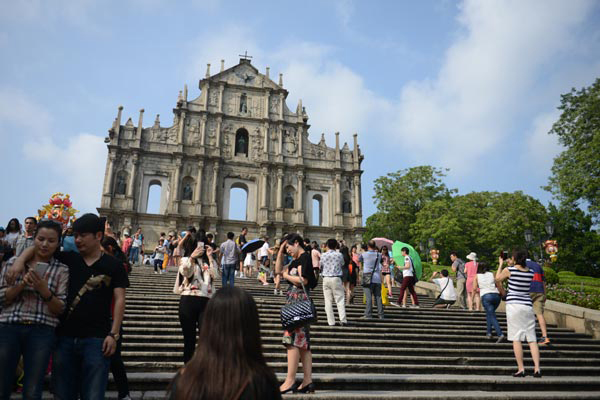
Historic Centre of Macao
Introduction
The Historic Centre of Macao represents a rich tapestry of cultural and architectural heritage, nestled on the Macao Peninsula. It includes a group of 22 principal buildings and public spaces, showcasing the oldest Western architectural heritage on Chinese soil. This unique site symbolizes the blending of Eastern and Western cultural elements, exemplifying cultural pluralism and architectural traditions. As a testimony to the city's vital role in cultural exchange, the Historic Centre of Macao was inscribed as a UNESCO World Heritage Site on July 15, 2005. The centre illustrates the dissemination of Chinese folk beliefs to the Western world, while also highlighting the missionary endeavors of the city in the Far East, forming a unique blend of cultural heritage within China's historic cities.
History
Macao's history is steeped in its strategic significance as a bustling port during the development of international trade. The city was under Portuguese administration from the mid-16th century until 1999, when it was returned to Chinese sovereignty. This period marked the beginning of nearly five centuries of continuous interaction between East and West. The settlement of Macao by Portuguese navigators laid the foundation for an international trading port, making it a consistent example of cultural interchange between Europe and Asia. For almost three centuries, until the colonization of Hong Kong in 1842, Macao's location at the mouth of the Pearl River enabled it to serve as a critical hub in a complex network of maritime trade, enriching the enclave both culturally and economically.
Architecture
The Historic Centre of Macao is a testament to the city's diverse architectural legacy, merging European and Chinese styles. The site is renowned for its Western-style fortresses, churches, and the iconic Ruins of St. Paul's, which reflect the influence of Portuguese architectural design. These structures, alongside traditional Chinese elements, create a vivid and unique urban landscape. The Ruins of St. Paul's, originally the Church of Mater Dei, stand as a prime example of this fusion, with its façade embodying a mannerist style interspersed with oriental motifs. The architectural narrative of the Historic Centre of Macao extends beyond religious buildings, encompassing residential areas like Lilau Square, which was the first residential district of Portuguese settlers.
Cultural Significance
Macao's cultural significance lies in its role as a conduit for cultural exchange between East and West. This unique cultural pluralism is evident in the coexistence of diverse religious practices, including Catholicism, Buddhism, Taoism, and the worship of Mazu. The Historic Centre of Macao has been a focal point for these cultural interactions, with the mingling of traditions enriching the city's cultural tapestry. The presence of various European religious orders, such as the Jesuits, further exemplifies Macao's role in introducing Western concepts of social welfare and education to China, evident in the establishment of Western-style hospitals, schools, and the first movable-type printing press in the region.
Tourism
Tourism in the Historic Centre of Macao is driven by its rich cultural heritage and unique architectural landscape. Visitors are drawn to its historic sites, including the Ruins of St. Paul's, A-Ma Temple, and Senado Square, each offering a glimpse into the city's storied past. The centre's compact area allows tourists to explore its landmarks by foot, providing an immersive experience of Macao's distinct blend of cultures. Cultural festivals and events, such as the Macao International Music Festival and Art Macao, further enhance the city's appeal, showcasing its vibrant cultural scene and promoting cross-cultural dialogue. The Historic Centre of Macao continues to be a significant destination for cultural tourism, attracting visitors from around the world.








